Collogh Cares
THE CHALLENGE
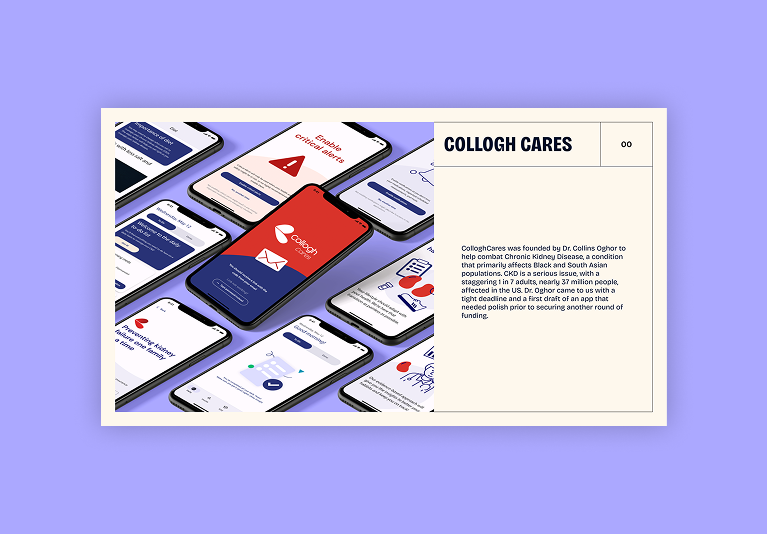
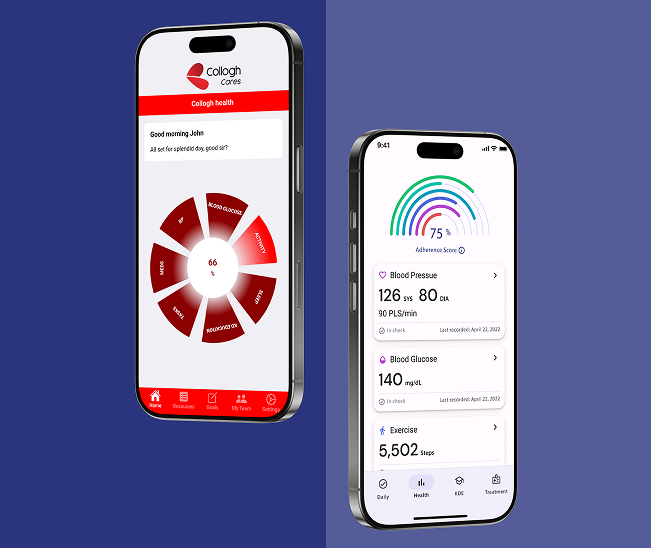
The client's draft centered on a "health wheel." Blood pressure, glucose, weight, medication, diet, sleep. Each got an equal wedge. Medically, that holds up, since every one of those numbers affects kidney function. Patients don't live it that way. Missing a dose of medication matters far more than a rough night's sleep, and a flat layout gave them no sense of what to do first.
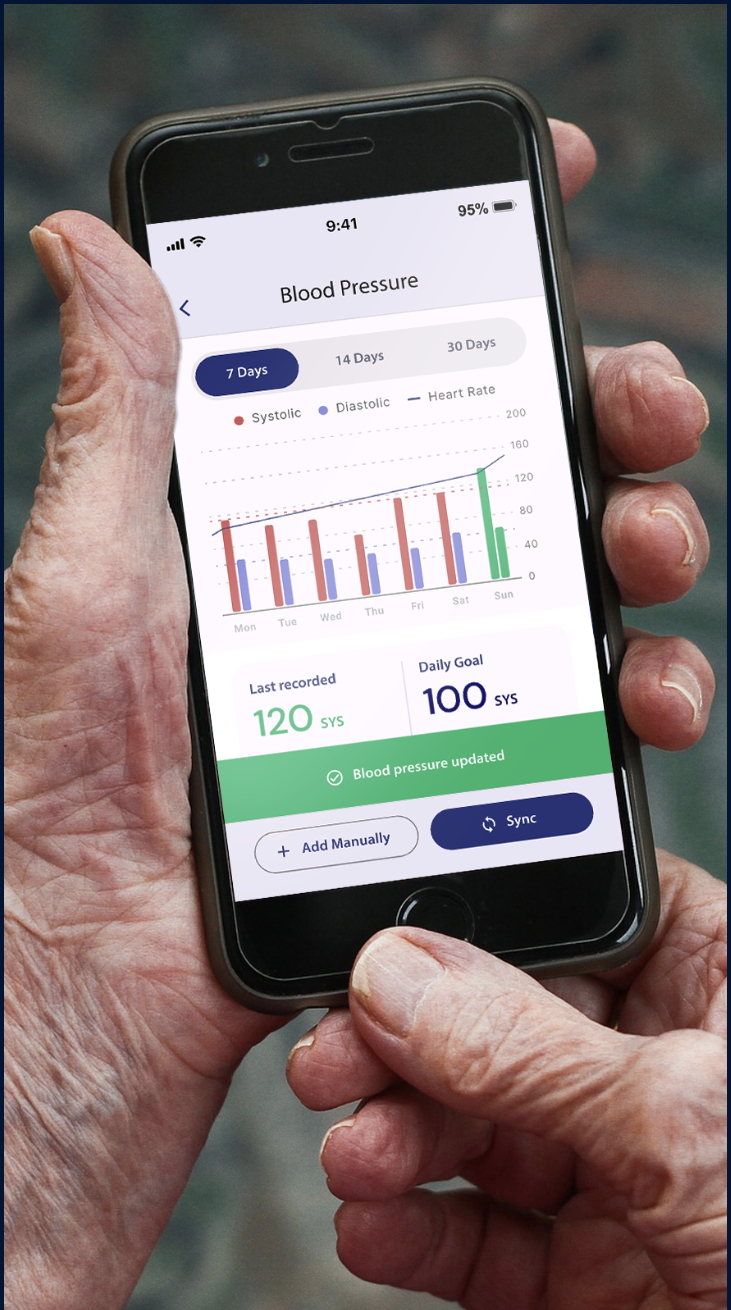
Then there was who we were designing for. People with CKD skew older, often with lower tech literacy, and the disease itself can affect eyesight. That meant bigger touch targets, higher contrast, and less to process on every screen. All of it designed, tested, and handed off in 16 weeks.
Gallery
Designing for Real Routines
Testing with CKD patients takes care. Privacy matters, the conversations get heavy, and not everyone on the panel could afford the treatment they needed. We worked with medical experts, legal consultants, and kidney disease advocacy groups to put together a patient group who could take part safely and stay with us through the whole process. From there it was video interviews, co-design sessions with the medical team, and an early interactive mockup we put in front of patients round after round. Each round changed what we built next.
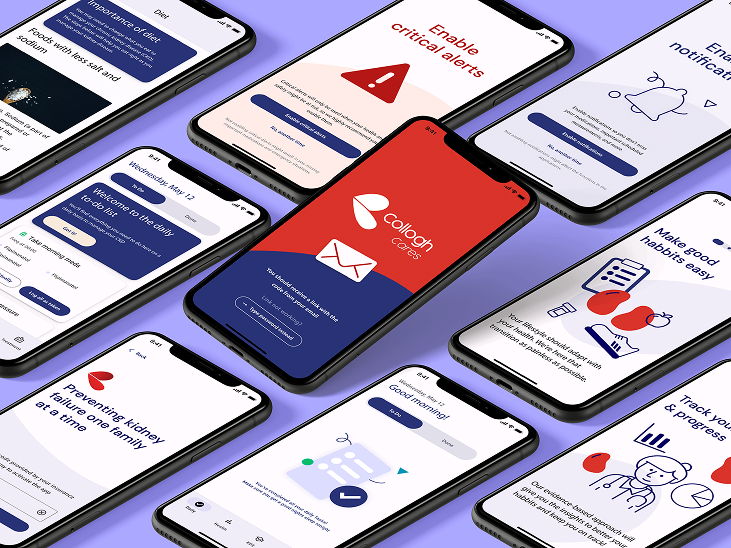
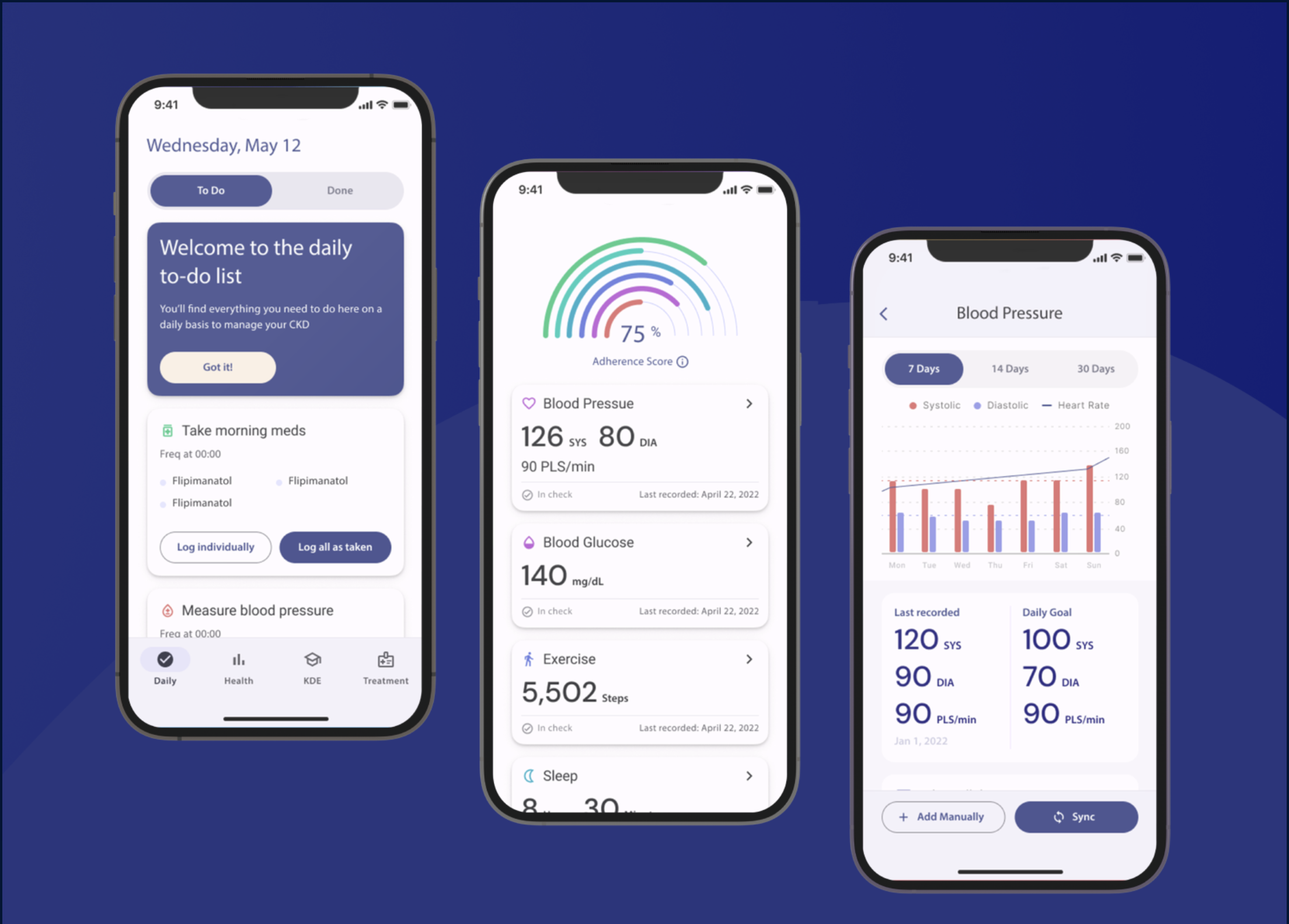
The biggest finding was simple. Patients already had their own systems, routines and reminders built out of necessity that worked for them even if they were held together with duct tape. They didn't need an app lecturing them on what a compliant patient looks like. They needed gentle nudges and a clear picture of their health. So we built the Daily view, which reads more like a to-do list than a medical app: here's what matters today, in this order, go. To hit the deadline, we built on an existing developer-ready component library and only went custom where it counted. Daily was the clearest example.
Impact
The final prototype went straight into ColloghCares' funding presentation and helped them land their next round. The app is now moving toward launch and FDA approval. With data flowing in from trackers and monitors, patients can work through their CKD education program at home instead of at the hospital, with the aim of lowering their risk of renal failure.