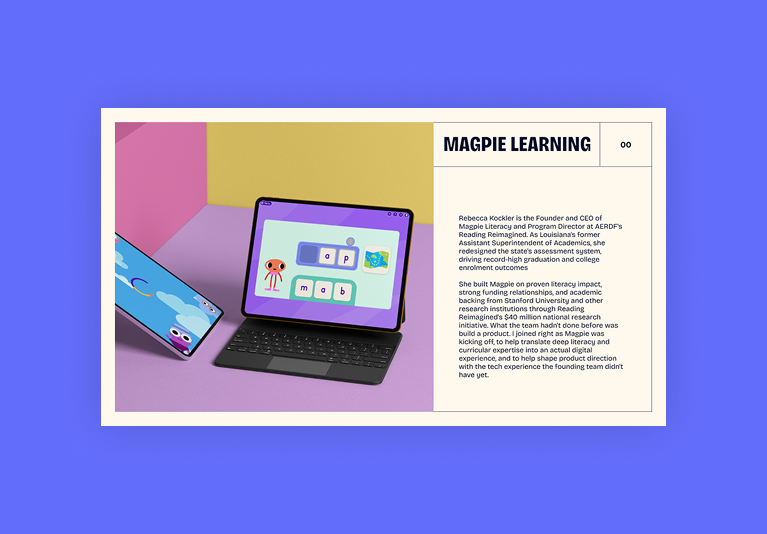

Magpie Literacy
Context & Challenge
Research shows that without crossing the “decoding threshold,” students struggle to access reading comprehension. But literacy tools don’t live in research papers they live in classrooms.
The challenge was designing a system that could support entire districts while still working for a single teacher managing 25 students on shared devices. Assessment needed to feel integrated, not disruptive. Literacy mechanics needed to scale across K–8 without losing clarity or confidence.
This meant designing for instructional rigor within the messy realities of real classrooms.
Gallery
Designing for Scale
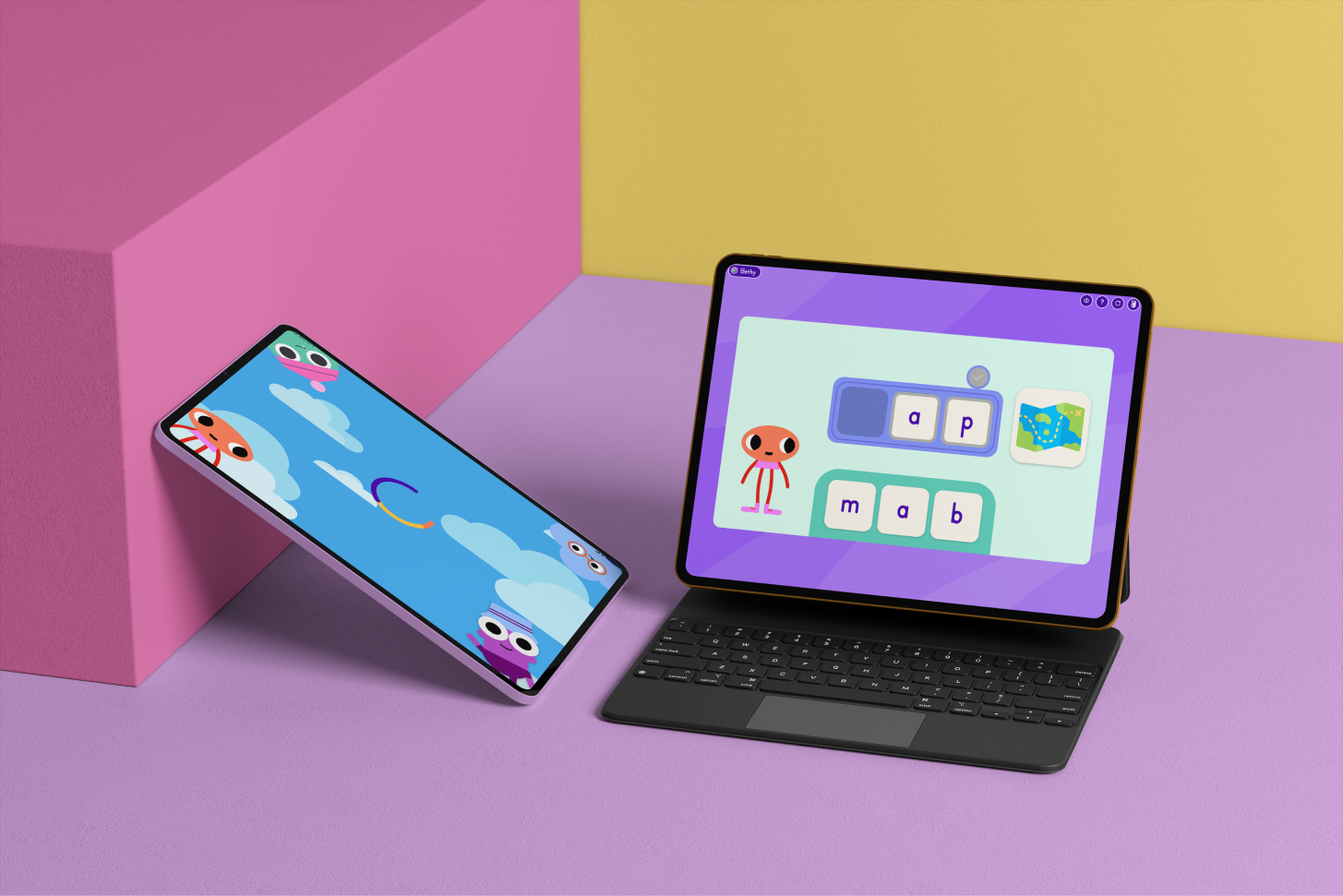
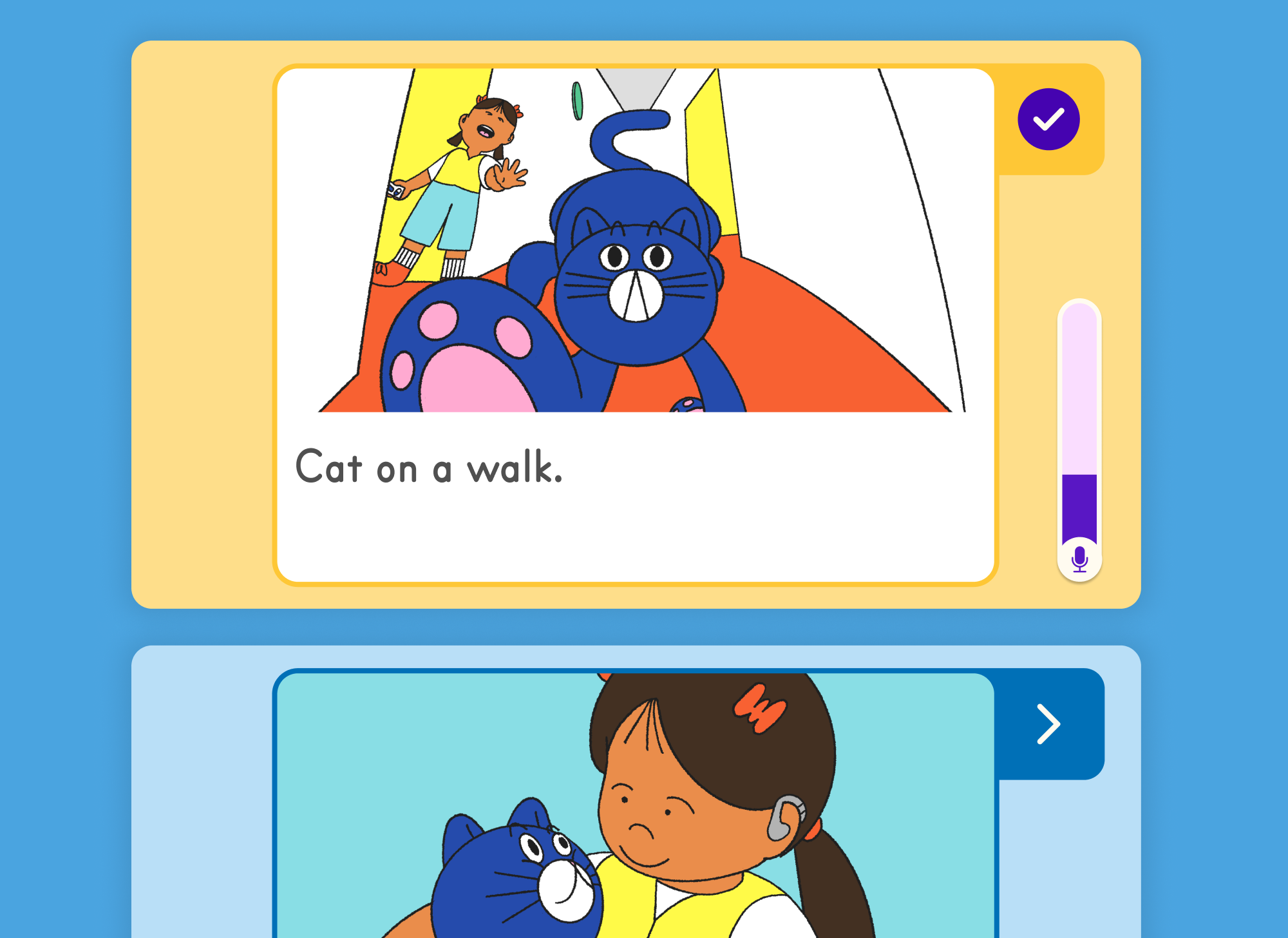
To make that possible, I built a modular design system spanning the learning games and the supporting CMS infrastructure. Components were structured to align directly with how engineering would implement them, which reduced iteration cycles and made handoffs cleaner. Reusable interaction patterns meant new literacy experiences could ship quickly without rebuilding core mechanics from scratch each time.


Impact at Scale
The product went on to support 15,000+ students annually through instructional games and contributed to district-wide assessment deployments reaching 30,000+ students.
Magpie operates within a broader research-to-classroom pipeline, where digital tools are continuously validated, piloted, and expanded across districts. My role focused on strengthening the systems that allowed that growth to happen reliably.